The locomotives that haul Vintage Trains journeys are not replicas or museum exhibits. They are working machines, maintained to mainline standards at Tyseley Locomotive Works in Birmingham. Every one has a history that stretches back decades. Between them they represent some of the most significant surviving examples of British steam and diesel engineering, and together they are the reason every Vintage Trains departure feels like something special.
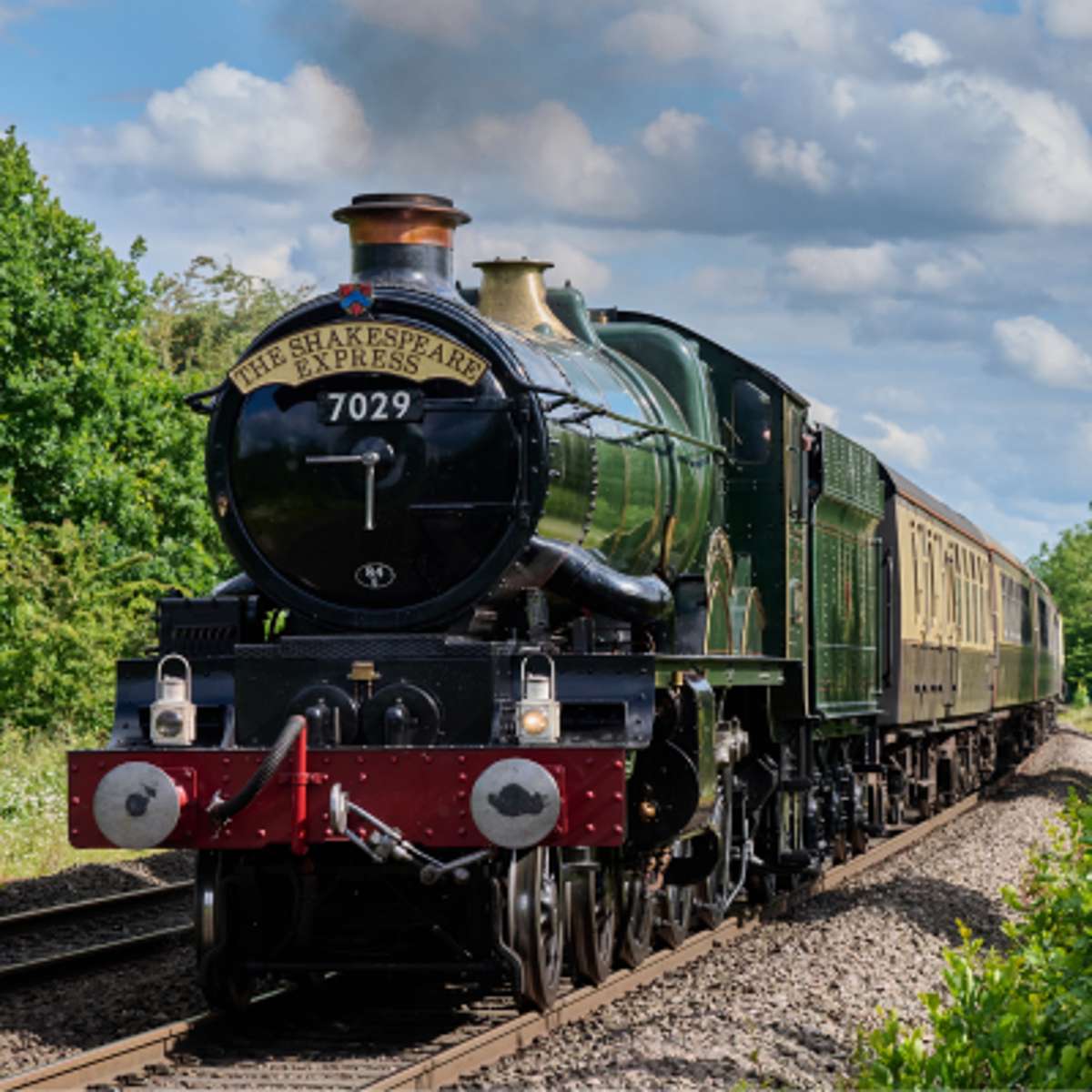
7029 CLUN CASTLE
Built in 1950 to Charles Collett’s 1923 Great Western Railway design, Clun Castle is one of the most storied locomotives in British railway history. In the late 1950s she was fitted with a four-row superheater and double chimney, which sharpened an already exceptional performance and allowed her to compete with the diesels being introduced on fast express services at the time.
In 1964, on the Plymouth to Bristol route, Clun Castle set the record for the shortest timed point-to-point journey on that stretch, a run that secured her preservation and marked the beginning of what would become Vintage Trains at Tyseley. She also hauled the last steam train out of London Paddington, the last steam train on the Western Region, the last express steam working on the GWR’s northern route to Birkenhead, and the last steam departures from both Birmingham Snow Hill and Birmingham Moor Street.
When British Rail’s short-lived steam ban was lifted, it was Clun Castle that hauled the first Return to Steam celebration run. In 1985, the then Prince of Wales drove her from Birmingham Snow Hill to Tyseley as part of the 150th anniversary celebrations of the London and Birmingham Railway. In 1992 she became the first steam locomotive to return to Cornwall since the end of regular steam operation, as part of the GWR’s 150th anniversary.
Clun Castle has now been in charitable ownership for nearly 60 years, almost four times the length of her working life under British Railways.
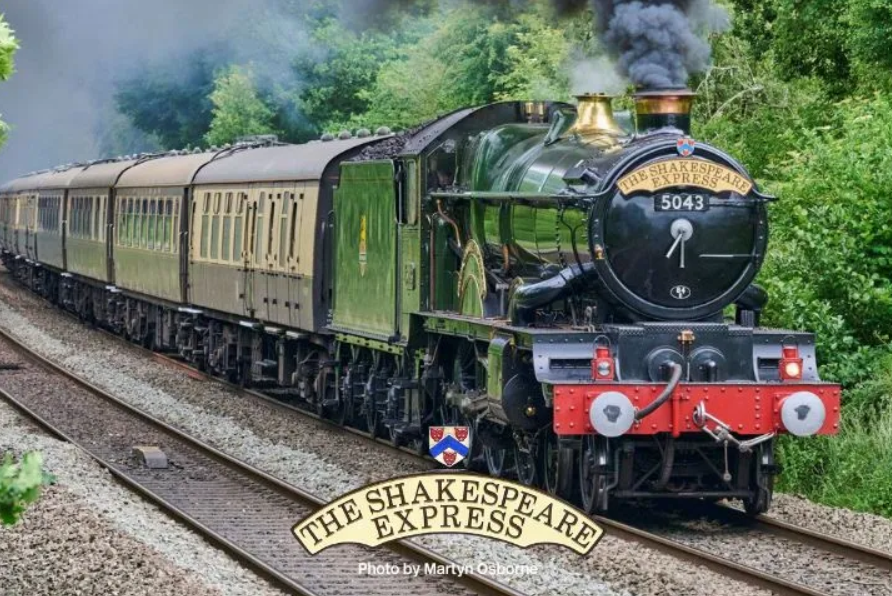
5043 Earl of Mount Edgcumbe
Built in 1936, Earl of Mount Edgcumbe is an authentic Great Western Railway locomotive, predating nationalisation and carrying the character of the railway that designed her. Originally named Barbury Castle, she was renamed in 1937 after one of the GWR’s aristocratic directors. In 1958 she was among 65 Castle class locomotives to be fitted with a four-row superheater, double blast pipe, and double chimney, the same configuration that transformed the performance of Clun Castle.
Based at London’s Old Oak Common depot, she worked some of the Western Region’s most prestigious express services including The Bristolian. Withdrawn in 1963 and sold to Woodham Brothers’ scrapyard at Barry, she spent nearly nine years in the open air before being acquired by Vintage Trains, originally for spare parts. The decision was later taken to restore her in her own right, and she returned to steam in 1996 following a full rebuild at Tyseley Locomotive Works.
Since then, Earl of Mount Edgcumbe has covered considerable ground for Vintage Trains, including runs to Stirling and Edinburgh, and has recreated several of her original named workings including The Bristolian, The Cheltenham Spa Express, and The Inter City. On the Plymouth to Bristol route she has since bettered Clun Castle’s own point-to-point record. In 2010, on the Settle-Carlisle line, she was credited with generating an estimated 2,030 equivalent drawbar horsepower, believed to be a power output record for the entire GWR Castle class and one that exceeds the maximum outputs of the diesel hydraulic locomotives built to replace steam on the Western Region.
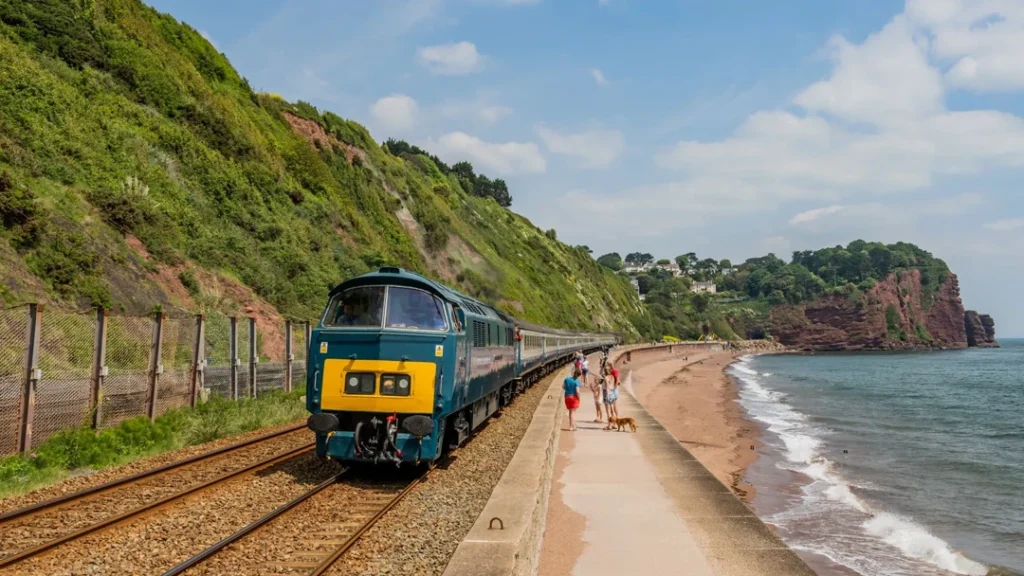
D1015 WESTERN CHAMPION
Built at Swindon in 1963 and allocated initially to Cardiff Canton, Western Champion is one of the 74-strong class of Type 4 diesel hydraulic locomotives that became known as the Westerns. Based on the German Railway’s ML3000 design, the British version ran two engines back-to-back in the centre of the locomotive, adding seven tons to the weight of the original but producing a machine of considerable power and character.
Western Champion was withdrawn from British Rail service in 1976 after just 13 years and 1,296,000 miles, by which point parts had already been removed. The Diesel Traction Group found the £6,125 needed to buy her and spent several years returning her to mainline standard. Following 1,000 miles of running-in on the Severn Valley Railway, she returned to the mainline in December 2001, 25 years after withdrawal, and the Diesel Traction Group began running mainline charter trains with her from February 2002.
She is currently painted in BR Blue, the livery she carried from 1968, having previously worn Golden Ochre and Maroon during her working life.
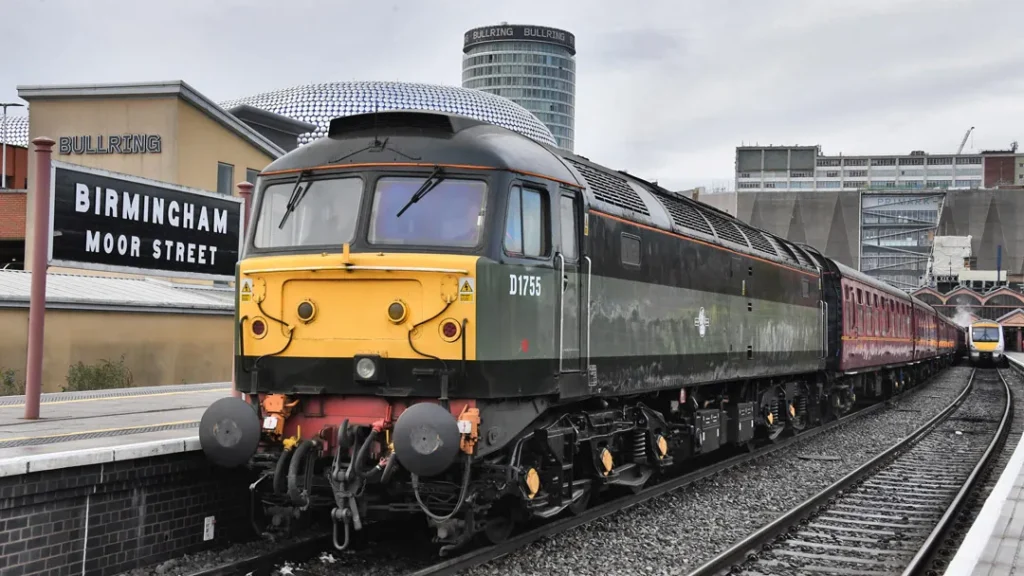
D1755 / 47773
One of the most successful diesel electric locomotive classes ever built for the British network, D1755 entered service in August 1964 at Swansea, constructed at the Brush Falcon Works in Loughborough. Renumbered 47541 under TOPS in 1974 and later 47773 in 1994, the locomotive carries a distinction shared by very few: on 20th October 1982, Her Majesty Queen Elizabeth The Queen Mother personally named her The Queen Mother at Aberdeen station, the first time a member of the Royal Family had named a locomotive in person. The name was later removed, then quietly restored at Toton freight depot, making 47773 possibly the only locomotive to have been given the same name twice.
Withdrawn from service in 2004 and acquired by Vintage Trains three years later, D1755 was repainted into two-tone green and returned to the Birmingham Division territory where she was allocated between 1969 and 1970. She provides essential support to the steam fleet, covering empty stock moves, shunting, and summer mainline operations when temporary steam bans apply.
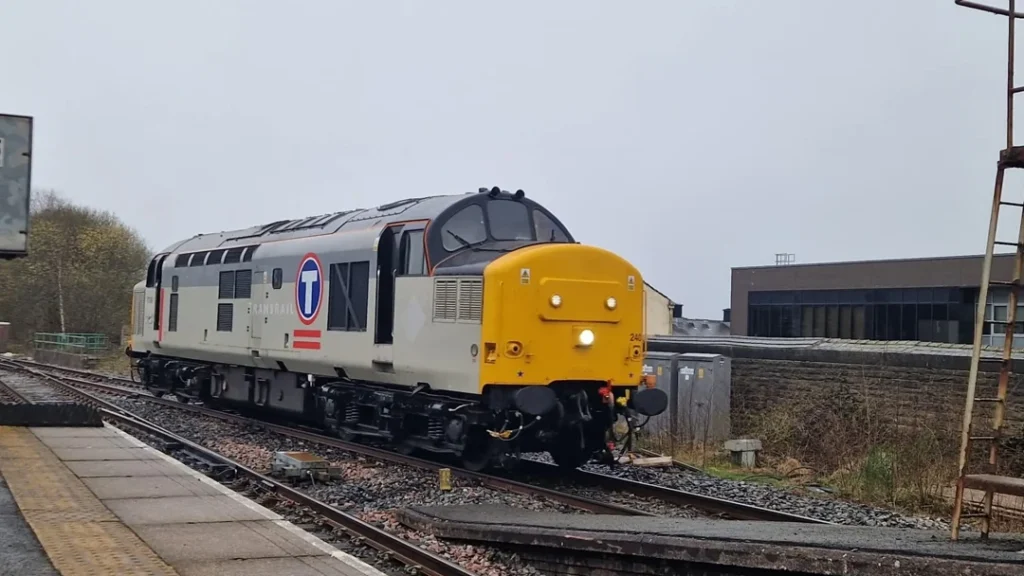
D6940 / 37240
The newest member of the Vintage Trains fleet, 37240 is an English Electric Type 3 locomotive built in 1964 at Newton-le-Willows. Designed as a mixed traffic locomotive and originally fitted with a steam heating boiler, she worked across South Wales, Yorkshire, and the North East before finishing her British Railways career at Eastfield depot in Glasgow in 1988, followed by withdrawal from service 14 years later.
In preservation, 37240 spent time at Llangollen with the Llangollen Diesel Group before moving to Boden Rail Engineering, who re-registered her for use on Network Rail infrastructure in 2020. She has been in Vintage Trains ownership since 2022 and, following a thorough overhaul, has recently completed her first mainline passenger workings since 1996.